

Gum Disease Blackheath
At Artisan Implants every effort will be made to save your teeth if we can, with our periodontal experience.
What is Gum Disease?
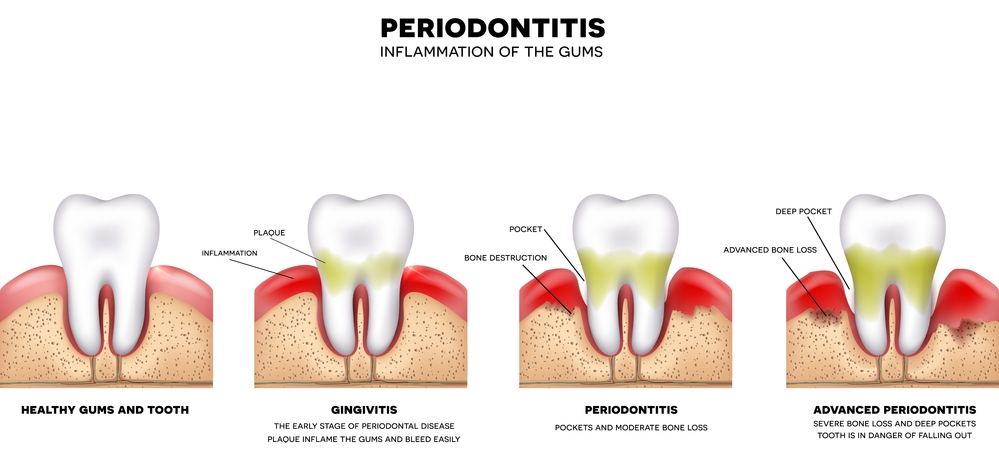
Gum disease is a very common condition where the gums bleed easily and can become sore. This is caused by development of a plaque layer on teeth which contain bacteria. Plaque is a sticky film which develops on teeth due to inadequate oral hygiene maintenance.
Plaque can be very easily removed through efficient tooth brushing. However, if allowed to stay, the bugs in it initiate an inflammatory response in the gums causing sore, swollen and bleeding gums.
Bleeding on brushing your teeth is often the first sign of the developing gum disease.
Enquire Now About Gum Disease Treatment
If you’d like more information, or to book a consultation, do not hesitate to get in touch with us today.
About Gum Disease
Gum Disease has two main progression stages:
Gingivitis
Gingivitis is the mildest form of gum disease; it is a reversible infectious inflammatory condition affecting the gums associated with plaque accumulation on the affected tooth surfaces. It does not affect the bone supporting the teeth. If left untreated, it can but not always lead to the development of periodontitis.
Periodontitis
If gingivitis is not treated it can lead to Periodontitis. It is an irreversible condition where presence of gum inflammation results in gum attachment and bone loss around the affected teeth. This gum attachment loss and bone resorption results in the formation of periodontal pockets around the involved teeth roots. Eventually, the teeth become loose and painful and might need to be removed.
Risk Factors associated with Gum Disease
Plaque is the main contributory factor in the development of Gum Disease. However, there are other factors which contribute to exacerbate the effect of plaque induced gum disease. These include:
- Smoking
- Poorly controlled diabetes
- Genetic susceptibility
- Stress
- Some medications
If you are aware or your dentist has suggested that you suffer from gum disease, call us today to get in depth assessment and a treatment plan for your individual case. For price see the Pricing page of our website.
Treatment
Periodontal treatment at Artisan Implants can be broadly divided into the following stages:
1. Consultation and Assessment
At this appointment our Dentist with Special Interest in Periodontics, Dr. Uzma Umer, is going to carry out a detailed assessment of the disease and associated risk factors. This can involve a thorough oral examination, charting of periodontal pockets and bone levels and taking photographs and radiographs. Following this appointment a detailed patient specific written treatment plan will be issued.
2. Cause related therapy
The initial phase of periodontal treatment is aimed at efficient plaque removal and elimination of factors associated with plaque formation in order to prevent further inflammatory destruction of periodontal tissues. At Artisan Implants, Dr Uzma Umer achieves this through deep cleaning of the root surfaces, which is considered the gold standard treatment for chronic periodontitis.
This results in reattachment of soft tissues to the root surface and shrinkage of the soft tissue margins, leading to resolution of periodontal pocket.
Following debridement Uzma educates the patients in effective daily plaque control. The aim of the therapy is to stop or significantly reduce the disease progression. If the treatment is successful, patient is advanced to the maintenance phase.
3. Maintenance Phase
In the maintenance phase Uzma provides regular professional supportive care including reinforcement of oral hygiene instructions and motivation. She would carry out regular deep cleaning of teeth and would follow-up the treatment progression with radiographs, as required.
4. Surgical Treatment
Surgical phase is indicated when the initial treatment has failed to achieve the desired outcome. Surgery is aimed at gaining access to the deeper parts of periodontal pockets for more effective cleaning and plaque control, reducing pocket depths and restoring clinical attachment.

£1,750
Single completed implant with crown
Consultation is FREE with the implant surgeon (normally you would see a treatment coordinator)
Free Consultations
Affordable but quality dental implant treatment in Blackheath, London
£11,000
Same day full jaw dental implants
Full jaw Dental implants with fixed teeth on the same day, £20,000 for both Jaws